


Women Leading the Future of Sport: WiMENA 2026 at the Houses of Parliament


From the debates of Committee Room 14 to an evening of recognition on the House of Commons Terrace, WiMENA 2026 brought together women and leaders from Britain, the Middle East and the international sporting world.
By Rebeca Riofrio | Parliament News Magazine
There are events that speak about change, and there are those that put the people making it happen in the same room. WiMENA 2026 belonged firmly to the latter.

On 14 September, the Houses of Parliament welcomed an international gathering from sport, government, business, technology and media for an afternoon and evening devoted to a question of growing importance: what will the future of sport look like, and who will have a voice in shaping it?
For Parliament News Magazine, it was a particular pleasure to attend and support an initiative that places women not at the margins of the conversation, but at its centre.
I attended in my capacity as Chairwoman of the Parliamentary Society for Arts, Fashion & Sports, accompanied by Singaporean philanthropist Lana Saliot. It was wonderful to see so many familiar faces, but equally valuable to meet a new generation of athletes, executives, entrepreneurs and innovators whose work is changing sport far beyond the field of competition.
The day unfolded in two distinct chapters.
The first took place inside Committee Room 14 at the House of Commons, where discussion was serious, international and deliberately forward-looking.

The programme opened with a keynote address from Nusrat Ghani MP, Chairman of Ways and Means and Madam Deputy Speaker, alongside Ros Lynch, Deputy Director for Creative Industries and Education at the Department for Business and Trade.
From there, the conversation moved quickly from aspiration to substance.
The opening panel, “Grassroots to Greatness”, examined how participation today creates the champions, professionals and audiences of tomorrow. Moderated by Lisa O’Keefe MBE, it brought together perspectives from Ali AlDajani, President of the Saudi Arabian Rugby Federation; Burcu Cetinkaya, Chair of the FIA Women in Motorsport Commission; strategic adviser Jo Maher; and Ella Lloyd, F1 Academy driver with McLaren.
The subject mattered because elite sport does not begin beneath stadium lights. It begins much earlier: at a local club, in a school, with access to facilities, with encouragement, and often with one person willing to tell a young girl that there is a place for her.
That human element remained present throughout the afternoon.
A presentation from Dr Philip Batty, Consultant in Sport and Exercise Medicine at Cleveland Clinic London, brought health and performance into the discussion before attention turned to “Her Story. Our Future” — a conversation about the women already changing sport and those who will follow them.
Moderated by Karen Webb Moss, Chair of Aquatics GB and strategic adviser and chair at More Than Equal, the session featured Ameera Marghalani, Captain of the Saudi Arabia Women’s Rugby Team; motorsport professional Dania Akeel; and professional swimmer Freya Anderson MBE.
Their sporting disciplines may be different, but the broader message was shared: visibility matters. When women are seen competing, leading and succeeding, possibility becomes tangible for those watching behind them.
Yet WiMENA also understood something increasingly important: modern sport is an industry as much as it is competition.
“The New Business of Sport”, moderated by Kate Beavan, explored investment, innovation and the careers developing around a rapidly changing global sector. Heba Bevan OBE, founder and CEO of UtterBerry; Chris Longof SELA; and Maria Laura Scuri, Vice President of Product, Community and Digital Platforms at ESL FACEIT Group, considered where technology and commercial opportunity are taking the industry.
The final discussion looked even further ahead.
Under the title “The Future of Sport”, moderator George Vaughan, Director of Tech at YTL Live/Aviva Arena, was joined by Alexandra Willis, Chief Digital Officer at The FA; Rawan AlButairi, CEO of the Saudi Esports Federation; Jacqueline Bourke, Senior Director, Creative at Getty Images; and Daniel Bailey, CEO of Veloce Media Group.
Artificial intelligence, digital communities, esports, creators and new forms of fan engagement are no longer peripheral subjects. They are becoming part of the architecture of modern sport.
And this was perhaps one of the strengths of WiMENA 2026. It did not treat women in sport as a single-issue conversation. It connected participation with leadership; leadership with business; business with technology; and technology with the audiences of tomorrow.
From Conversation to Recognition

As the formal discussions concluded, the atmosphere shifted.
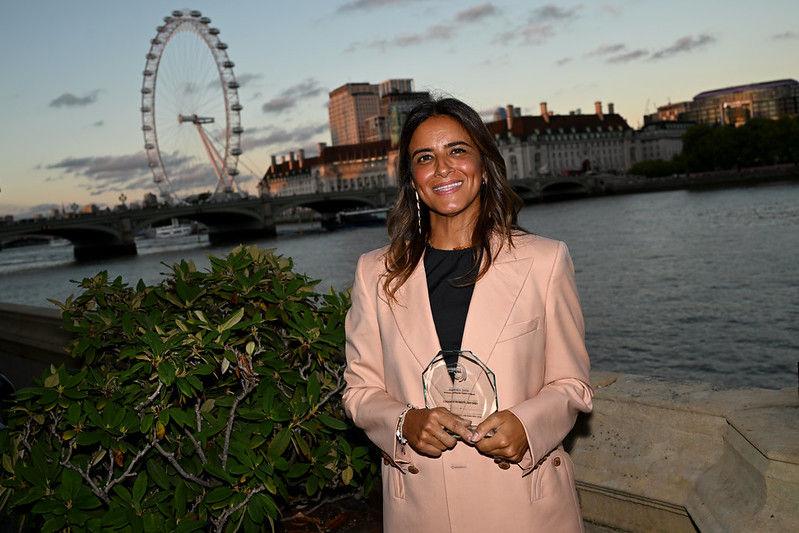
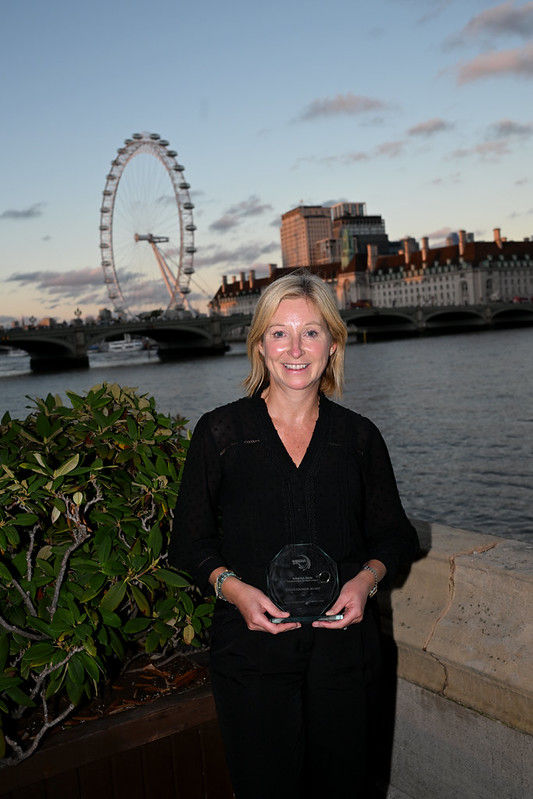
The second part of the event moved to the House of Commons Terrace, one of Westminster's most recognisable settings, for the WiMENA Awards Reception.
Against the backdrop of the Thames, the emphasis moved from discussing progress to recognising the women helping to create it.

Exceptional women working across the sporting industries were celebrated for achievement, leadership and impact. It was a fitting conclusion to an afternoon that had repeatedly returned to the importance of making women's contributions visible.
Recognition has value.

Not because an award completes somebody's work, but because it records it. It tells the next generation: this contribution mattered; this woman helped move her industry forward.
WiMENA describes itself as a business-to-business network connecting women from the UK and Middle East with the wider international business community. Its roots lie in the earlier Women in Business initiative, while its present work seeks to encourage commercial opportunity, knowledge exchange and greater representation for women across sectors.
In sport, that mission arrives at an important moment.

Women are no longer simply asking to participate. They are athletes, federation leaders, investors, technologists, commercial decision-makers, broadcasters, founders and executives. They are influencing how sport is played, financed, communicated and experienced.
The room at Westminster reflected that change.

For the Parliamentary Society for Arts, Fashion & Sports, supporting and attending gatherings of this nature is important because meaningful progress rarely happens in isolation. It happens when institutions, industries and individuals meet; when experience is shared; and when access creates another opportunity for somebody else.
It was therefore a genuine pleasure to be present, both representing the Society and as Editor-in-Chief of Parliament News Magazine.

Our congratulations go to Tara Thomas and Laura Curtis, the founders of WiMENA, for bringing together such a substantial programme and an impressive international community. Their platform continues to connect the UK, Middle East and wider world while ensuring women's voices are part of the mainstream economic and sporting conversation.
And perhaps that was the clearest message to emerge from Westminster.
The future of sport will be shaped by technology. It will be shaped by investment. It will be shaped by new audiences and new forms of media.
But ultimately, it will still be shaped by people.
By those prepared to open a door.
And by the women ready to walk through it.
For more information : https://www.wimena.com



Comments